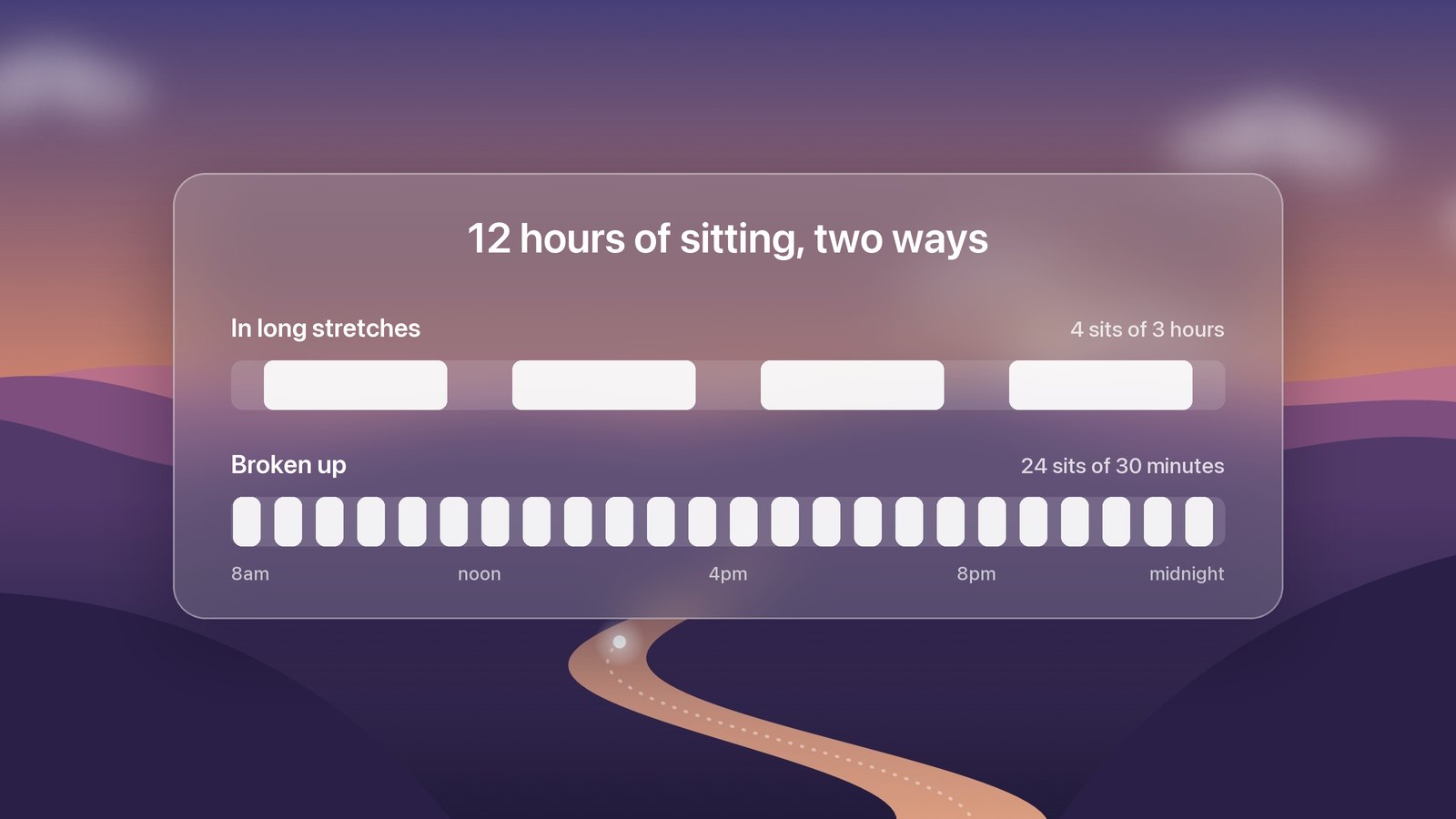
Most advice about sitting is about the total: sit less, stand more. A 2017 study in the Annals of Internal Medicine asked a sharper question. If two people sit for the same number of hours, does it matter whether one of them gets up often and the other sits for an hour or more at a time?
It does seem to. Here's what the researchers did, what they found, where the study falls short, and what it means for a working day at a desk.
What the study measured
The study was led by Keith Diaz, an exercise scientist at Columbia University Irving Medical Center. His team used people from REGARDS, a long-running national study of Black and white adults in the United States.
Nearly 8,000 of them, all aged 45 or older, wore a small activity monitor on their hip during waking hours for about a week. The monitor recorded every minute they were still and every minute they moved.
That was what made the study stand out at the time. Most earlier research on sitting asked people to estimate how much they sat, and people are bad at that. Few can say how long they sat in one go, or how often they got up. A monitor doesn't have to guess.
From the recordings, the researchers worked out two numbers for each person:
- Total sedentary time: how many waking minutes a day they spent still.
- Average bout length: how long a typical stretch of stillness lasted before they moved.
Then they compared both numbers against who died over the following years.
What they found
Both numbers mattered. The more people sat in total, the higher their risk of death. And the longer their typical stretch of sitting, the higher their risk too.
Figure
Risk of death rose with more sitting and longer stretches
Each bar is a quarter of the participants. Risk is compared with the quarter who sat least, shown in grey.
Exercise didn't cancel it out
The researchers adjusted for moderate and vigorous exercise, along with other factors that affect health. The link held up. A run in the morning didn't make up for sitting still the rest of the day.
The riskiest combination
Looking at both numbers together, the people at highest risk sat for 12.5 hours or more a day and had typical stretches of 10 minutes or more. According to Columbia's summary of the study, the people at lowest risk were those who kept most of their sitting bouts under 30 minutes.
How much to trust it
This is a well-designed study, but it has real limits, and they're worth knowing before you read headlines about it.
A link, not a cause
People who sit in long stretches might already be less healthy in ways the researchers couldn't fully measure. Someone with heart disease or arthritis may sit more because they're unwell.
One week of data
A single week of monitoring is a snapshot. Habits change, and a week may not reflect years of daily life.
Hip monitors can't see posture
A monitor on the hip records stillness, so it can't always tell sitting from standing still.
Older participants
Everyone was 45 or over. The authors noted the group may not represent the whole US population, so results for younger desk workers are less certain.
The follow-up: what to do instead
Diaz's team went back to the same data in a 2019 paper in the American Journal of Epidemiology. This time they asked what would happen, statistically, if people swapped 30 minutes a day of sitting for something else.
Swap for light activity, like walking around
Swap for moderate or vigorous activity, like a brisk walk
Break long sits into short sits, without moving more
So standing up for a second and sitting straight back down probably isn't enough. What seems to help is the movement itself. A short walk counts. It doesn't need to be exercise.
The follow-up has the same limits as the original, since it uses the same people and the same week of data. It's a statistical model of a swap, not an experiment where people changed their habits.
What this means for a desk job
Neither study tells you the exact right schedule, and Diaz has said the same: "we don't yet know precisely how much activity is optimal." But together they point to a simple habit.
"...we suggest taking a movement break every half hour."
Keith Diaz, lead author, on people whose jobs keep them sitting
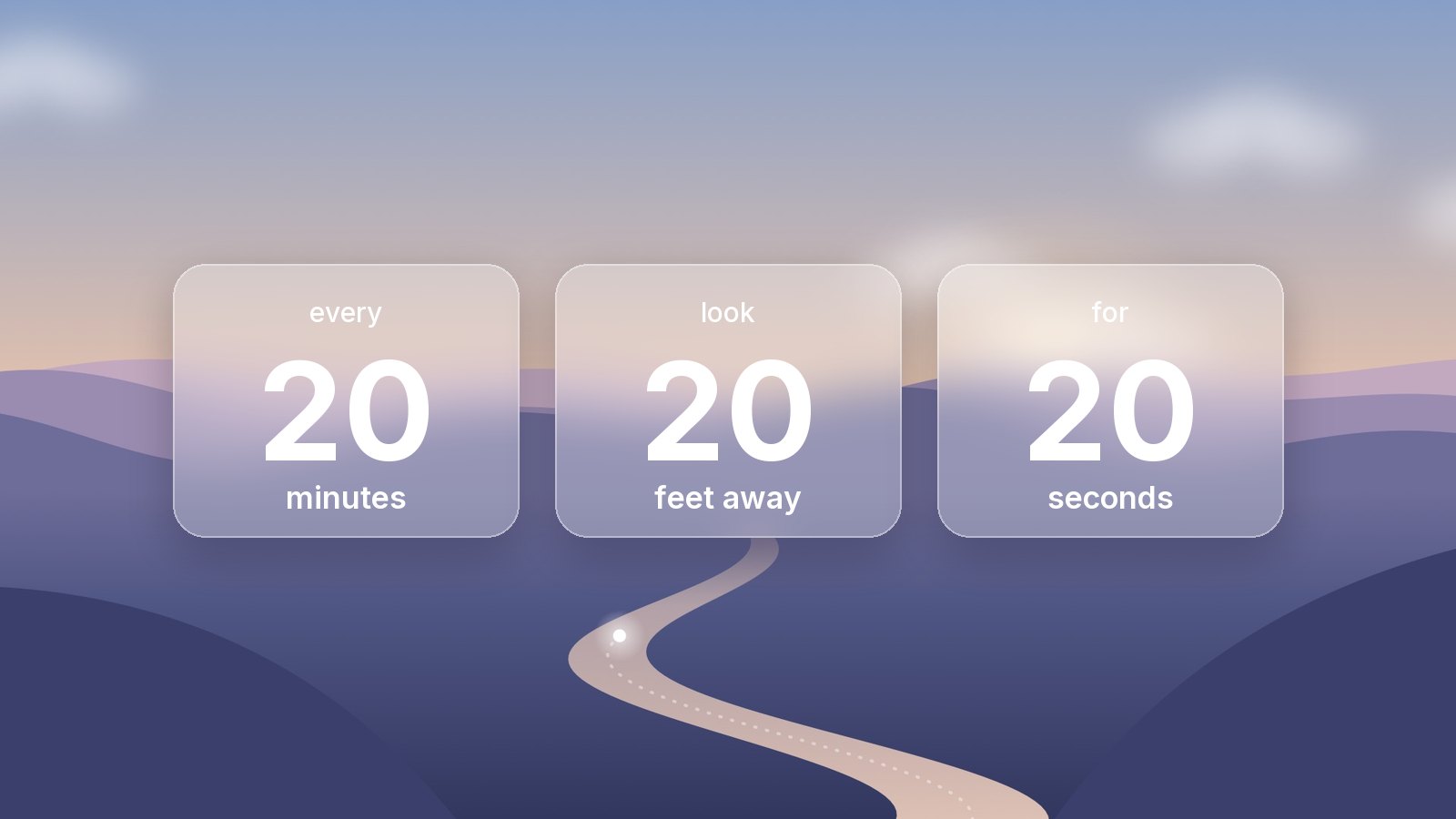
- Get up every 30 minutes to an hour. Short, regular breaks are what the lowest-risk group had in common.
- Make it a walk, even a short one. Fill a glass of water, walk to a window, take the stairs. Light movement is what the follow-up linked to lower risk.
- Don't rely on exercise alone. A workout is good for you, but in this study it didn't erase the link between long, still days and a shorter life.
- Cut the total where you can. Standing for calls, walking meetings and an evening walk all bring the daily total down.
The hard part isn't knowing this. It's remembering to do it when you're deep in work and an hour slips by. A reminder helps. On a Mac, Meander is a free one that nudges you to get up, and waits until you're off a call or done with a video before it asks.
This article is general information, not medical advice. If you have a health condition, talk to your doctor before changing how active you are.
Sources
- Diaz and others, Patterns of sedentary behavior and mortality in U.S. middle-aged and older adults: a national cohort study, Annals of Internal Medicine, 2017
- Columbia University Irving Medical Center, Long sitting periods may be just as harmful as daily total, 2017
- Diaz and others, Potential effects on mortality of replacing sedentary time with short sedentary bouts or physical activity: a national cohort study, American Journal of Epidemiology, 2019
- Columbia University Irving Medical Center, Physical activity, any type or amount, cuts health risk from sitting, 2019